Formaldehyde-Free. PFAS‑Free.
Proven at Industrial Scale.
CAGE replaces formaldehyde, PFAS, and heavy metals with proprietary food‑grade catalysis — 4 patents filed, validated at UBC, $140K Mitacs grant, 37 of 40 tracks outperforming toxic incumbents in computational screening.
Eight Frontiers of Clean Chemistry
Textiles & Fabrics
Formaldehyde-free wrinkle resistance and durable press finishing for fabrics.
Coatings & Surfaces
PFAS-free water and grease resistance for food packaging and paper products.
Wood & Construction
Formaldehyde-free wood adhesives and bio-based bonding agents.
Paper & Packaging
Sustainable barrier coatings and treatments for paper and packaging.
Plastics & Recycling
Bio-catalytic depolymerization of plastics using food-grade compounds.
Agriculture
Sustainable seed coatings and crop protection without synthetic pesticides.
Biomedical & Specialty
Non-toxic crosslinkers for medical devices and tissue engineering.
Leather & Hides
Chrome-free tanning and finishing treatments for leather processing.
Proof, Not Promises
First two USPTO provisional patents filed
Application #64/007,156 (coatings & platform) and #64/007,194 (recycling) — covering food-grade organocatalysis across industrial substrates.
UBC partnership established
Prof. Feng Jiang (UBC Chemistry) agreed to collaborate. Dean Mark MacLachlan (UBC Science) invited CAGE to lecture.
Mitacs IT52016 grant approved — $139,999
Federal peer-reviewed funding secured for CAGE's textile finishing research with UBC co-supervision.
Third USPTO provisional filed
Application #64/094,365 — a further method patent deepening the platform's IP moat.
Lead track at TRL 5 — pilot-scale validated
W.A.R.P. (formaldehyde-free textile finishing) independently validated at UBC. 37 of 40 computational tracks outperform toxic incumbents.
Lab Results, Not Claims
Five months of independent ATR-FTIR spectroscopy at the University of British Columbia. 110+ spectra. Mitacs-funded. Every number measured, not modelled.
Full durable crosslinking in a 1-minute cure — more than double the control, and more crosslinking than our own 2-minute window. Conventional formaldehyde-free finishing needs several minutes. The CAGE catalyst does it in one.
Independent ATR-FTIR spectroscopy · University of British Columbia · Dr. Jianan Yin · Mitacs IT52016 · March–August 2026 · 110+ spectra · Formulation proprietary
Industrial Scale. Real Markets.
Proprietary food-grade organocatalysis addresses $30B+ in industrial markets where toxic incumbents face regulatory pressure and brand mandates.
Research Tracks
Industrial applications screened computationally and lab-validated.
Beat Incumbent
Tracks where food-grade chemistry outperforms toxic alternatives computationally.
Market Size
Total addressable market across 55 application tracks.
Latest Research & Analysis
Deep-cited analysis on formaldehyde, PFAS, and the regulatory deadlines reshaping industrial chemistry.
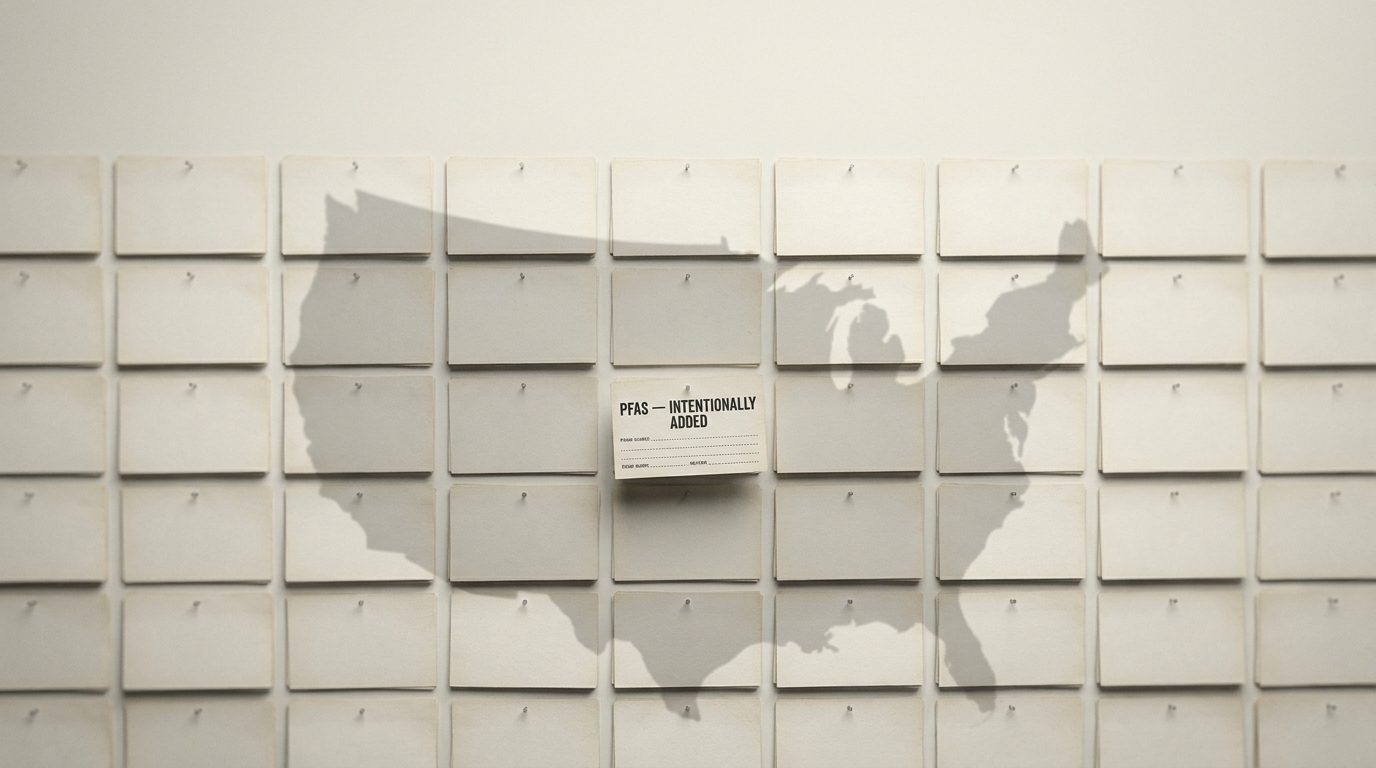
The toughest US chemical-disclosure law just came due — and most brands only track the bans
On September 15, Minnesota's Amara's Law forced brands to file every product containing intentionally added PFAS. Because nobody makes a Minnesota-only shirt, one state's database now documents PFAS across the whole US market. Here's what reporting — not just bans — demands.
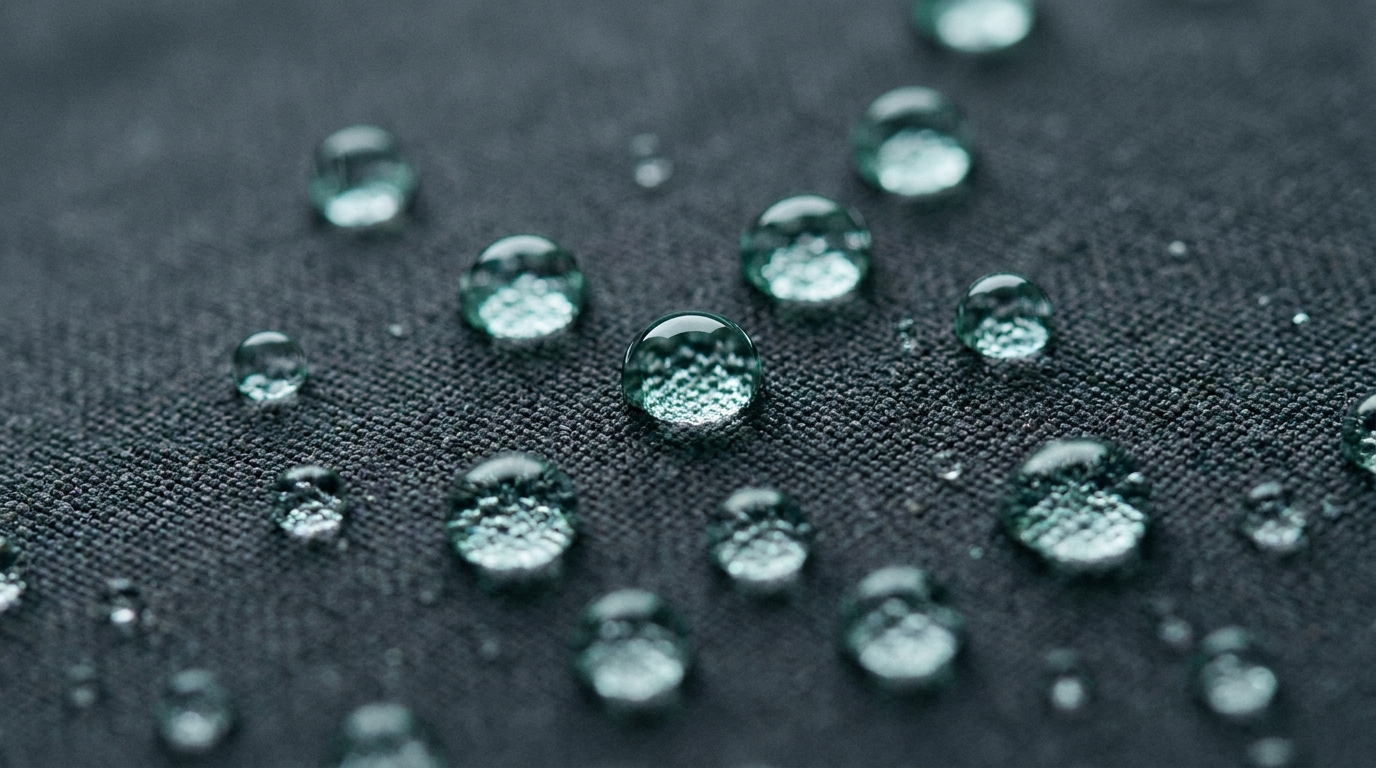
The bans are working: PFAS in tested raincoats fell up to 99.99%
Two years after California and New York restricted PFAS in clothing, independent lab testing found the “forever chemicals” had dropped by up to 99.99% in some outdoor brands' raincoats — proof the shift to cleaner textiles is real, and measurable.
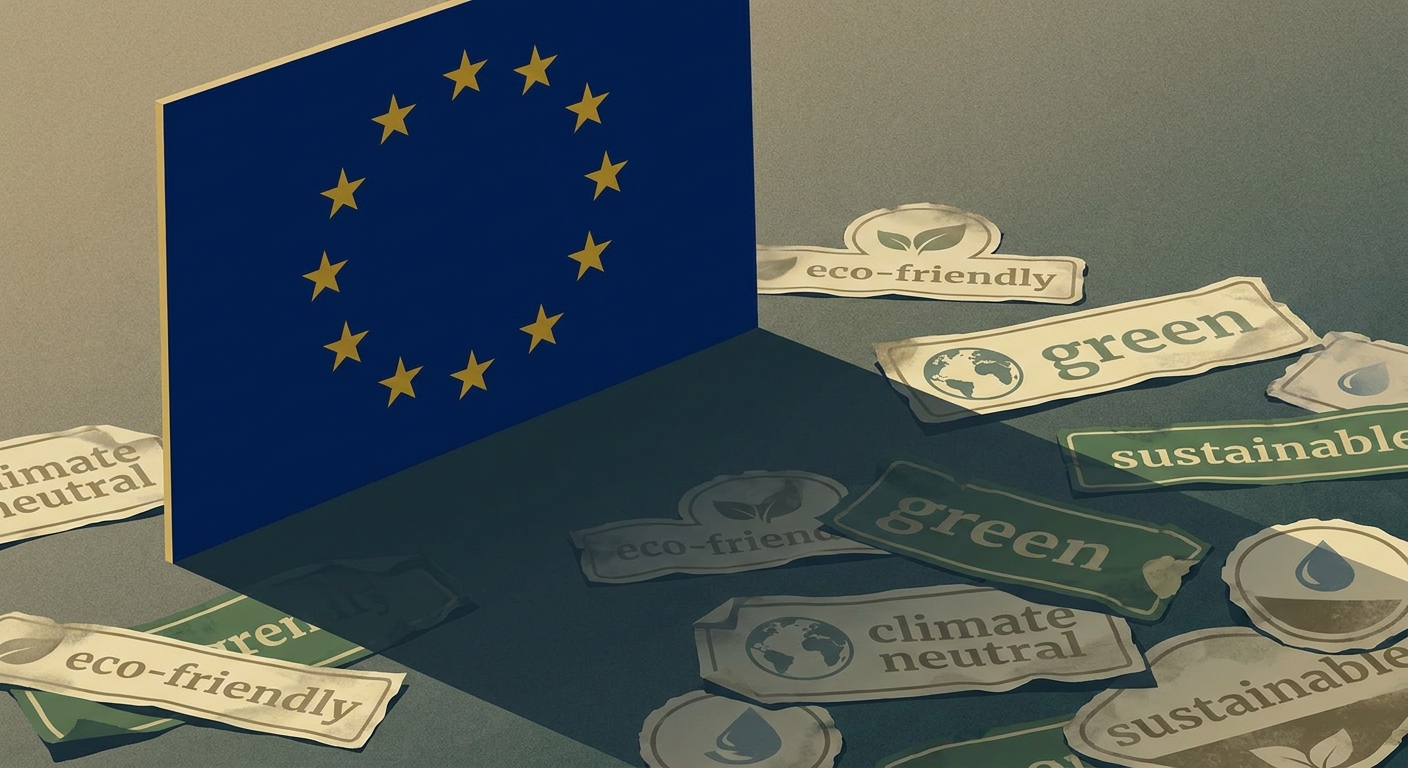
The EU just banned “eco-friendly.” Here’s what survives September 27.
On September 27, the EU bans “eco-friendly,” “climate neutral,” and every self-created sustainability label. Six marketing practices become illegal overnight — no transition period. Here’s what survives.
Built by Scientists, Not Marketers
Cornelius van Heerden
Engineer at one of the world's largest technology companies. Built CAGE's computational screening pipeline, research platform, and patent portfolio from first principles.
CAGE's approach: replace toxic industrial chemicals — formaldehyde, PFAS, heavy metals — with proprietary food-grade catalysis. Not a single product, but a platform that maps the right catalyst to each industrial application.
The result: 4 USPTO provisionals filed, $140K in peer-reviewed Mitacs funding, a UBC research partnership, and 37 of 40 computational tracks outperforming toxic incumbents.
Frequently Asked Questions
What does CAGE replace formaldehyde and PFAS with?
CAGE uses proprietary food-grade organocatalysis — compounds already approved for use in food and pharmaceuticals — to perform the same industrial functions as formaldehyde resins, PFAS coatings, and heavy-metal catalysts. The technology is protected by 4 USPTO provisional patents.
How is CAGE's technology validated?
CAGE's lead track (formaldehyde-free textile finishing) has been independently validated at the University of British Columbia (UBC) under peer-reviewed Mitacs funding ($139,999 grant IT52016). Computational screening across 40 tracks shows 37 outperforming toxic incumbents, with lab confirmation following a multi-layer pipeline: xTB → DFT → molecular dynamics → lab validation.
What industries does CAGE serve?
CAGE's platform spans 8 categories and 55 research tracks: textiles and fabrics, coatings and surfaces, wood and construction, paper and packaging, plastics and recycling, agriculture, biomedical and specialty, and leather and hides. The lead market is textile finishing — a $12B+ sector facing formaldehyde bans across the EU, China, and Japan.
Why are regulators banning formaldehyde and PFAS?
Formaldehyde is classified as a Group 1 carcinogen by the International Agency for Research on Cancer (IARC). The EU reclassified it as a Category 1B carcinogen under CLP Regulation, triggering binding occupational exposure limits from 2026. PFAS ("forever chemicals") persist indefinitely in the environment and accumulate in human tissue; the EU's universal PFAS restriction proposal covers over 10,000 substances. These bans create a $30B+ replacement market.
Ready to Advance Clean Chemistry?
Join researchers working to replace every toxic industrial chemical with food-grade alternatives.
Already have an account? Login